
Reverie
The world's most famous nobody

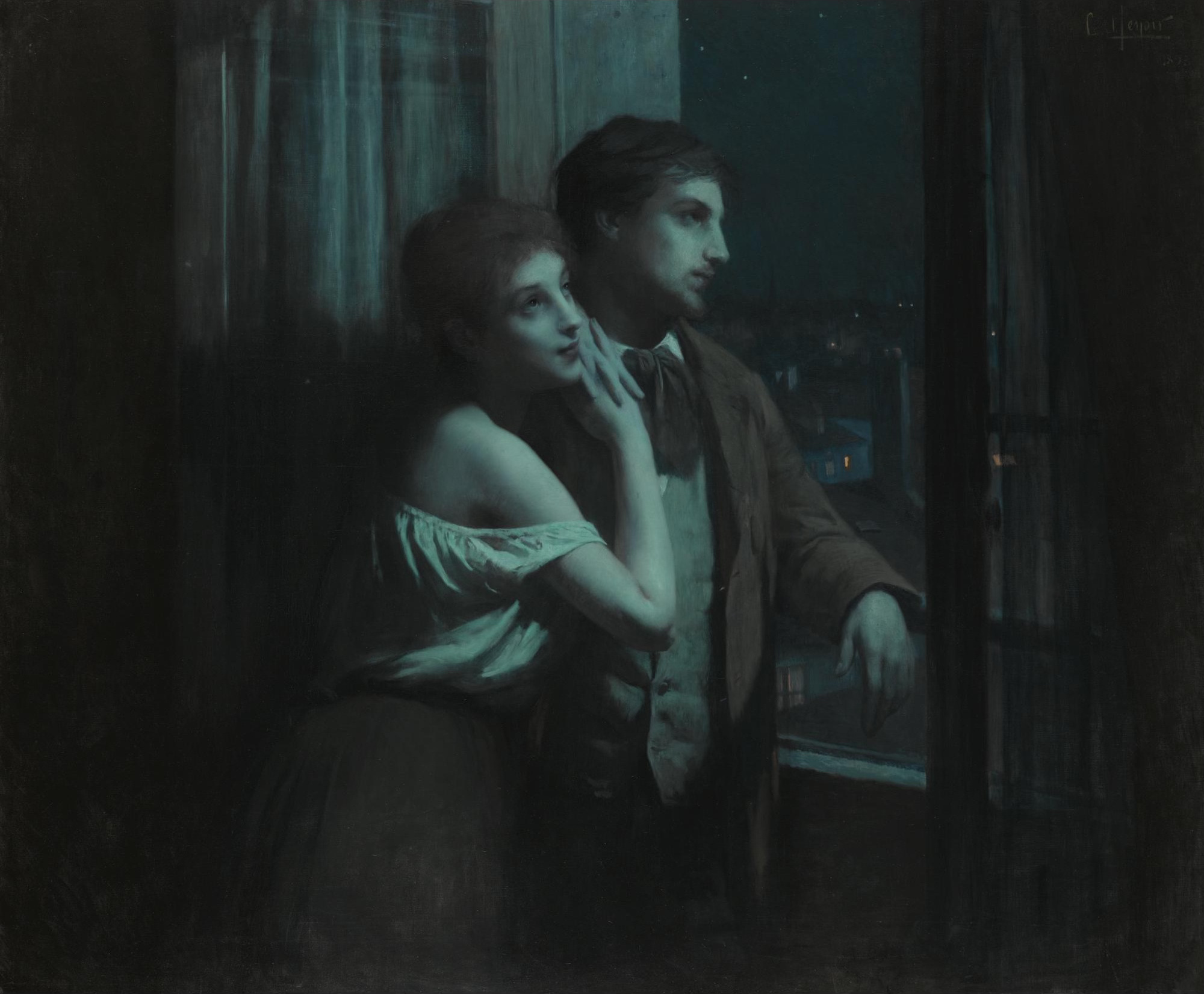
In a few centuries, in the lifetime of our great-great-great-great-great-great-grandchildren, what will the history books say about us? When I say “us,” I don’t mean, “our generation,” I mean you and I. The stranger reading this. What I most want to know is: do you think this is a ridiculous question? After all, I know nothing about you. Maybe you’ve reached some level of fame or wealth or power, but maybe you haven’t. Maybe you never even left the city where you were born. So when I ask, how will history remember you?, maybe you’re certain that it won’t. You’d be surprised how often the people who think that are proven absolutely, utterly wrong.
People at the time wouldn’t have been able to fathom that when we say “Bach,” we mean, of all people, that provincial mediocrity Johann Sebastian. When Mozart said, “Bach is the father, we are the kids,” he was talking about J.S. Bach’s much more famous son - Carl. Vivaldi died completely alone and penniless and now lies, like Mozart himself, in an unmarked grave somewhere beneath Vienna. This composer also belongs to their noble tradition. Even at the moment of his death, he could never have guessed how history would remember him.
When he died at just 31 years old, still in the same city where he was born in a slum, the twelfth of fourteen children (only four of whom survived childhood), he owned nothing much more than the mattress he was lying on, his clothes, and his roughly one thousand musical compositions, which he had squirreled away in cupboards and trunks, unnoticed by the world. History now remembers him as one of music’s immortal masters and as an expert at bringing about a certain mental state: reverie.
During the bombardment of Vienna by Napoleon, someone threw a grenade into the prefects’ room at his school and all the boys were upset that the prefects were not actually in the room at the time. As a boy, he was perfectly non-communicative, always off in his own world somewhere. He wrote two songs every day, until he wrote Gretchen am Spinnrade at seventeen and stopped writing entirely for six weeks (unheard of for him). People speculate that maybe he took himself by surprise, that this was his epiphany of his own genius. Maybe he just got distracted. In any case, for the rest of his life, he composed frantically, unceasingly, despite not having the money to actually own a piano. A painter friend commented that you would go visit him, ask “Hello, how are you?” and he’d simply say, “Good,” and carry on writing.
He grew up to become an impoverished schoolmaster and is unique in leading one of the most obscure, outwardly uneventful lives to ever be recorded by history. He has utterly defeated his biographers. Someone once mentioned him to Beethoven and said he was an incredible talent, but that “he hides himself,” and he hides himself even today. The picture people tend to paint of him is of a timid, unemotional man with thick glasses, but I’m sure we’ve got him wrong. Truly unemotional people don’t tend to write one thousand songs.
The pianist Alfred Brendel, referring to this composer, quoted the Romantic poet Novalis, saying “in a work of art, chaos must shimmer through the veil of order.” His work is often stereotyped as being merely pleasant, but don’t let him fool you. If you think his work is just pleasant, you’re distracted by the veil of order. If you look more closely, you’ll start to see the shimmering chaos.
In his pieces, you’ll find pure euphoria - Brendel wrote about the finale of the A Major Sonata, “in the scherzo I hear laughter and see hats thrown into the air” - but you’ll also find inescapable despair. In his song cycle Winterreise, if a song is in the major key, that doesn’t mean things are going well, it means someone is being delusional. For instance, Die Post, in E-flat major, is about a man who knows that a certain woman will never write to him again, but his heart still races whenever the postman comes out of sheer muscle memory.
You’ll even find the terror of death, as in the song Der Doppelgänger from Schwanengesang.
At twenty-six, his hair began falling out in clumps and his bones started to ache. He couldn’t stand bright light. He was admitted to the Vienna municipal hospital in such a state that they all expected he would die. He passed through the acute infection into the latent stage, but never fully recovered. He wrote to a friend saying, “Think of a man whose health will never be right again,” and “Think of a man, I say, whose brightest hopes have come to nothing.” His prodigious body of work was composed in just eighteen years, much of which he spent ill, and that’s only if we start counting at the age of thirteen. Many of his most beloved works come from the final year of his life, including his Great C Major Symphony, his Fantasy in F Minor, and his song cycle Schwanengesang - swan song.
Finally, he was so exhausted that he felt he could fall right through the bed. He couldn’t eat anything at all for eleven days. He asked his friends to come and perform for him a Beethoven string quartet that had recently been published, the Quartet in C Sharp Minor, Op. 131. Delirious, he seemed to think the earth had swallowed him. He begged his brother to dig him up, saying, “do not leave me here in this corner under the earth. Do I deserve no place above the earth?” His brother tried to reassure him that he was still in his room, but he replied, “No, it is not true. Beethoven is not here.”
After he died, his influence skipped a generation, but slowly grew over the course of the century. In 1888, the composer Franz Schubert was exhumed and laid to rest in a place of honor in the Vienna Central Cemetery, alongside Beethoven.